
<<Jul 9, 2025>> By David Blekhman –
The Los Angeles County Garbage Challenge
In the second article of the Reformed Carbon series, we meet Raven SR, which core technology is a proprietary, non-combustion, non-catalytic steam reforming process engineered to convert a wide array of organic waste into clean hydrogen-rich gas. Unlike traditional thermal conversion methods such as incineration, gasification, or pyrolysis—which typically rely on combustion, oxygen input, or catalytic beds—Raven SR’s two-stage process is driven by indirect electric heating, offering superior control over reaction conditions and emissions. This method is thermally efficient, feedstock-flexible, and especially well-suited for decentralized, modular waste-to-hydrogen installations.
In a June 2025 report “Transforming Waste Biomass into Clean Hydrogen: A Sustainable Path for Los Angeles and California,” the Green Hydrogen Coalition examines opportunities to produce hydrogen from biomass through non-combustion thermal conversion (NCTC) solutions in Los Angeles County, California. The analysis highlights landfill biosolids, wood, and paper waste as high-potential organic feedstocks. The study identifies nine existing waste processing facilities as candidate sites for NCTC deployment, with a combined processing capacity of 1.125 million tons of organic biomass—approximately one-third of the county’s total annual organic waste. At full capacity, these facilities could produce an estimated 90,000 tons of renewable hydrogen per year, sufficient to power roughly 9,000 Class 8 fuel cell trucks. The environmental impact would be significant: diverting biomass from landfills and reducing diesel combustion could prevent approximately 520,000 tons and 790,000 tons of CO₂ emissions, respectively. In this Reformed Carbon series of articles, we will examine whether Raven SR’s technology might offer a sound solution here.
Richmond Project
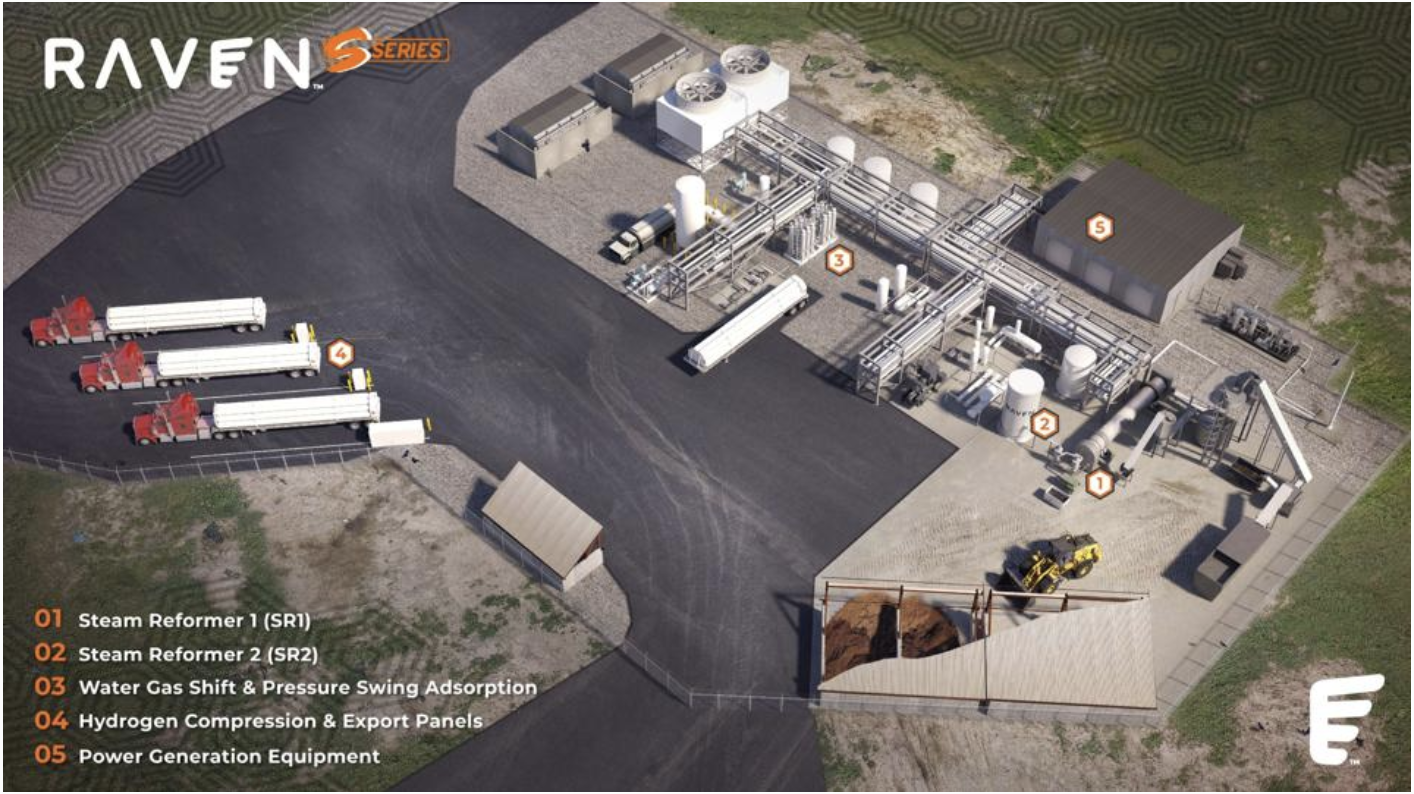
The Richmond Project is Raven SR’s first commercial-scale deployment of its proprietary, non-combustion waste-to-hydrogen technology. Located at the Republic Services’ West Contra Costa Sanitary Landfill in Richmond, California, north of San Francisco. The facility represents a pivotal advancement in the transition to renewable hydrogen and low-carbon fuels. This project integrates Raven SR’s patented Steam/CO₂ reformation process, one of the world’s only non-combustion pathways for converting organic waste into hydrogen, with a modular and scalable facility design that maximizes operational efficiency and sustainability.
The project is jointly owned 50/50 by Raven SR and Chevron Renewable Energy Group, following the exit of earlier partner Hyzon Motors. The total project cost has grown from its original estimate of $50 million to approximately $75 million, with around half already spent on equipment. The increase in cost is attributed to inflation, permitting delays, and project scope adjustments.
The facility is engineered to process up to 100 tons of organic waste per day, sourced locally from Republic Services. This feedstock includes mixed commercial waste with high organic content—such as green waste, and other carbon-rich materials. The output will include up to approximately 5.5 metric tons of renewable hydrogen per day (equivalent to ~2,000 metric tons per year), which will be cleaned to 99.999% purity, suitable for fuel cell and mobility applications. The plant will consume less than 6 MW of power, which doubles the hydrogen output relative to if the same energy were used for electrolysis.
Hydrogen produced at Richmond will be shared accordingly, with Chevron taking 50% of the output for mobility applications. The other 50% is expected to be marketed by RavenSR through partners and investors, such as Itochu (Japan-based trader). Distribution of the hydrogen will be managed via tube trailers, avoiding the need for pipelines and allowing flexible delivery to fuel stations and industrial users. The company has also engaged with additional potential off-takers but remains focused on executing this first project before scaling further.